
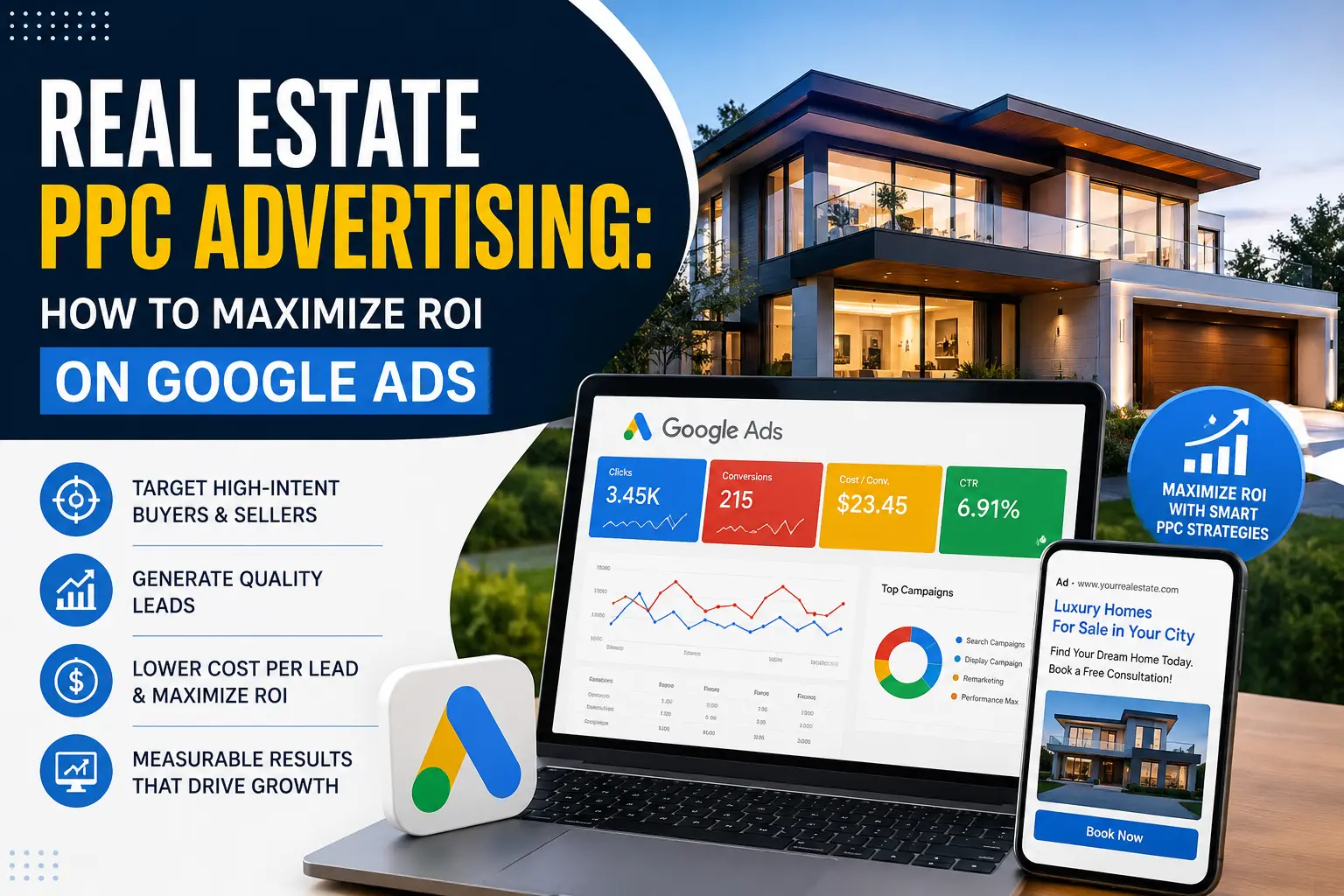
Real Estate PPC Advertising: How to Maximize ROI on Google Ads is one of the most effective ways for real estate agents, brokers, and developers to generate qualified leads quickly. Unlike SEO, which takes time to produce results, PPC advertising places your properties and services directly in front of potential buyers and sellers actively searching on Google.
To maximize success with Real Estate PPC Advertising: How to Maximize ROI on Google Ads, businesses must focus on keyword research, audience targeting, optimized landing pages, compelling ad copy, and continuous campaign optimization. Combining PPC with strategies like [Local SEO for Real Estate Businesses] and [SEO for Real Estate Agents] creates a complete digital marketing ecosystem that generates consistent leads and long-term growth.
Whether you’re promoting luxury homes, commercial properties, or residential projects, Real Estate PPC Advertising: How to Maximize ROI on Google Ads can significantly improve lead quality while reducing cost per acquisition when executed correctly.
Why Real Estate Businesses Need PPC Advertising
The real estate industry is highly competitive. Buyers and sellers often begin their journey with a Google search, making PPC advertising an excellent opportunity to capture high-intent prospects.
Benefits include:
- Immediate visibility on Google Search
- Highly targeted lead generation
- Measurable ROI
- Flexible budgets
- Fast campaign optimization
- Increased property inquiries
Unlike traditional marketing methods, PPC allows you to track every click, lead, and conversion.
Understanding Google Ads for Real Estate
Google Ads works on a pay-per-click model, meaning you only pay when someone clicks your advertisement.
Common Real Estate Google Ad Types
Search Ads
Appear at the top of Google search results for keywords such as:
- Homes for sale near me
- Real estate agent in [city]
- Luxury apartments for sale
- Property investment opportunities
Display Ads
Visual banner advertisements shown across Google’s network of websites.
Performance Max Campaigns
Use Google’s AI to show ads across:
Remarketing Ads
Target users who previously visited your website but didn’t convert.
How to Choose the Right Keywords
Keyword selection directly impacts campaign performance.
Focus on High-Intent Keywords
Examples:
- Buy house in [city]
- Real estate agent near me
- Luxury homes for sale
- New construction homes
- Commercial property for sale
Avoid Broad Keywords
Broad terms often generate irrelevant clicks.
Instead of:
- Real estate
Use:
- Real estate consultant in [city]
- Property dealer near me
- Buy apartment in [location]
Use Negative Keywords
Negative keywords prevent wasted spend.
Examples:
- Free
- Jobs
- Career
- Rental agreement
- Internship
This helps improve ad relevance and ROI.
Creating High-Converting Real Estate Ad Copy
Your ad copy should immediately address the user’s needs.
Key Elements of Effective Ads
Strong Headlines
Examples:
- Find Your Dream Home Today
- Top Real Estate Agent in [City]
- New Luxury Apartments Available
Clear Benefits
Highlight:
- Exclusive listings
- Free consultation
- Virtual property tours
- Local expertise
Strong Call-to-Action
Examples:
- Schedule a Viewing
- Get Property Details
- Book a Free Consultation
- Request Pricing
Landing Pages Matter More Than Ads
Many real estate businesses focus heavily on ads but neglect landing pages.
A well-designed landing page should include:
Property Information
Provide:
- Images
- Pricing
- Features
- Location details
Lead Capture Forms
Keep forms simple:
- Name
- Phone Number
Trust Signals
Include:
- Testimonials
- Reviews
- Certifications
- Awards
Mobile Optimization
Most property searches happen on mobile devices. Fast-loading pages improve conversion rates and Quality Scores.
Read Article On:- Why Your Real Estate Website Needs SEO to Generate Consistent Leads
Audience Targeting Strategies
Proper targeting reduces wasted advertising spend.
Geographic Targeting
Focus on:
- Cities
- Neighborhoods
- ZIP codes
- Local markets
Demographic Targeting
Target audiences based on:
- Age
- Income
- Interests
- Homeownership status
Remarketing Audiences
Reconnect with:
- Website visitors
- Previous leads
- Property page viewers
Remarketing often delivers some of the highest conversion rates in real estate marketing.
Tracking and Measuring ROI
Without tracking, it’s impossible to optimize campaigns.
Key Metrics to Monitor
Cost Per Click (CPC)
Measures the amount paid for each click.
Conversion Rate
Tracks how many visitors become leads.
Cost Per Lead (CPL)
Shows how much you’re spending to acquire each lead.
Return on Ad Spend (ROAS)
Measures revenue generated compared to advertising spend.
Use Conversion Tracking
Track:
- Form submissions
- Phone calls
- Property inquiries
- Appointment bookings
Accurate tracking helps identify top-performing campaigns.
Common PPC Mistakes Real Estate Businesses Make
Sending Traffic to the Homepage
Dedicated landing pages usually convert much better.
Ignoring Mobile Users
Poor mobile experiences increase bounce rates.
Not Using Negative Keywords
This often leads to wasted budget.
Running Ads Without Tracking
Without conversion tracking, optimization becomes guesswork.
Focusing Only on Clicks
Leads and conversions matter more than traffic volume.
Combining PPC with SEO for Maximum Results
The most successful real estate businesses combine paid and organic marketing.
PPC generates immediate leads while SEO builds long-term visibility.
For best results, integrate your PPC campaigns with:
- Local SEO strategies
- Content marketing
- Property listing optimization
- Google Business Profile management
- Real estate blogging
This approach creates multiple lead-generation channels and improves overall marketing performance.
Conclusion
Real Estate PPC Advertising: How to Maximize ROI on Google Ads is one of the fastest ways to generate qualified buyer and seller leads. By focusing on strategic keyword targeting, compelling ad copy, optimized landing pages, audience segmentation, and accurate conversion tracking, real estate professionals can significantly increase their return on investment.
When combined with SEO, local search optimization, and content marketing, Real Estate PPC Advertising: How to Maximize ROI on Google Ads becomes a powerful growth engine that delivers consistent leads and sustainable business growth. Businesses that continuously monitor and refine their campaigns will achieve the best results and maintain a competitive advantage in today’s digital real estate market.
Frequently Asked Questions (FAQs)
How much should a real estate business spend on Google Ads?
Budgets vary by market, but many real estate businesses start between $500 and $5,000 per month depending on competition and goals.
Are Google Ads effective for real estate lead generation?
Yes. Google Ads targets users actively searching for properties and real estate services, making it one of the most effective lead-generation channels.
What are the best keywords for real estate PPC campaigns?
High-intent keywords such as “homes for sale,” “real estate agent near me,” and “property investment opportunities” typically perform well.
How long does it take to see results from PPC advertising?
Most campaigns can generate leads within days of launching, making PPC one of the fastest digital marketing strategies.
Should I use SEO and PPC together?
Absolutely. SEO provides long-term organic traffic while PPC generates immediate visibility and leads, creating a balanced marketing strategy.
Suggested Internal Links:
- Local SEO for Real Estate Businesses: A Step-by-Step Guide
- SEO for Real Estate Agents: How to Rank Higher and Get More Listings
- How Google Ads Can Generate High-Quality Real Estate Leads
- Meta Ads for Real Estate: A Proven Strategy to Attract Buyers and Sellers
- Digital Marketing for Realtors: The Ultimate Growth Strategy