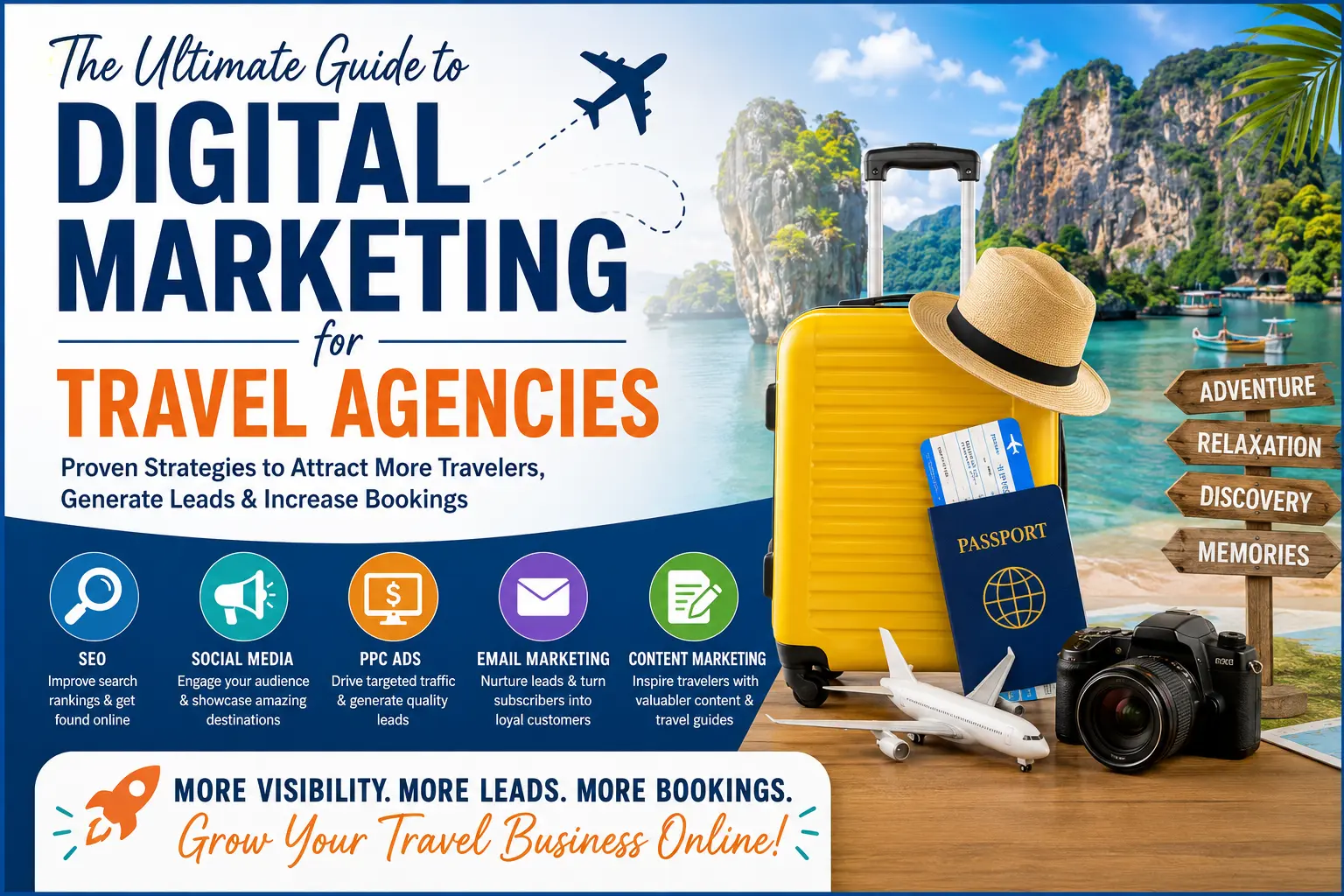
The travel industry has become highly competitive, and traditional marketing methods are no longer enough to attract modern travelers. Today, travelers research destinations, compare prices, read reviews, and book trips online. Digital Marketing for Travel Agencies: A Complete Growth StrategyThis makes digital marketing for travel agencies essential for generating leads, increasing bookings, and building long-term customer relationships.
Whether you operate a local travel agency or an international tour company, a strong online marketing strategy can help you reach your ideal audience, improve brand visibility, and drive more revenue.
What Is Digital Marketing for Travel Agencies?
Digital marketing for travel agencies refers to the use of online channels such as search engines, social media, email marketing, content marketing, and paid advertising to attract travelers and convert them into customers.
Key digital marketing strategies include:
- Search Engine Optimization (SEO)
- Google Ads and PPC Campaigns
- Social Media Marketing
- Content Marketing
- Email Marketing
- Local SEO
- Online Reputation Management
- Conversion Rate Optimization
Travel agencies that invest in digital marketing typically generate more qualified leads, improve customer engagement, and increase booking conversions.
Why Digital Marketing Is Important for Travel Agencies
Modern travelers begin their journey online. Before booking a vacation, they search for destinations, tour packages, travel tips, and customer reviews.
Digital marketing helps travel agencies:
- Increase online visibility
- Reach targeted travelers
- Generate qualified leads
- Build brand authority
- Improve customer trust
- Increase bookings and revenue
- Stay competitive in the travel industry
Without a strong online presence, travel businesses risk losing potential customers to competitors Search Engine Optimization (SEO) for Travel Agencies
SEO is one of the most cost-effective digital marketing strategies for travel agencies. It helps your website rank higher in search engine results when travelers search for relevant services Target Travel-Related Keywords
Focus on keywords such as:
- Best travel agency near me
- International tour packages
- Family vacation packages
- Luxury travel agency
- Honeymoon travel packages
- Adventure travel services
Use these keywords naturally throughout your website content. Create Destination-Based Content
Publishing destination guides helps attract travelers during the research phase.
Examples:
- Best Places to Visit in Dubai
- Complete Guide to Bali Travel Packages
- Top European Destinations for Families
Internal Link Opportunity: Link these destination articles to your travel package pages.
: Optimize for Local SEO
Local SEO helps travel agencies appear in local search results.
Best practices include:
- Optimize your Google Business Profile
- Collect customer reviews
- Use local keywords
- Add location-specific landing pages
Content Marketing for Travel Agencies
Content marketing establishes your agency as a trusted travel resource.
Useful content formats include:
- Travel blogs
- Destination guides
- Travel checklists
- Itinerary suggestions
- Travel videos
- Customer success stories
High-quality content not only improves SEO but also builds trust with potential customers. Create Travel Guides That Solve Problems
Travelers often search for answers before booking.
Examples:
- Visa Requirements for Europe
- Best Time to Visit Thailand
- Budget Travel Tips for Families
This content attracts organic traffic and nurtures leads.
Social Media Marketing for Travel Agencies
Social media platforms are powerful tools for showcasing travel experiences.
Popular platforms include:
- YouTube
- TikTok
Travel is a highly visual industry, making social media ideal for inspiring potential customers.
H3: Share Engaging Travel Content
Post:
- Destination photos
- Travel reels
- Customer testimonials
- Travel tips
- Behind-the-scenes content
- Promotional offers
Consistent posting improves brand awareness and engagement.
H2: PPC Advertising for Travel Agencies
Pay-per-click advertising can generate immediate leads and bookings.
Effective PPC channels include:
H3: Google Ads
Target travelers searching for:
- Travel packages
- Holiday deals
- Flight and hotel packages
- Honeymoon packages
H3: Meta Ads
Facebook and Instagram ads help travel agencies reach users based on:
- Travel interests
- Locations
- Demographics
- Travel behaviors
PPC campaigns provide quick visibility while SEO delivers long-term growth.
H2: Email Marketing for Travel Agencies
Email marketing remains one of the highest ROI digital marketing channels.
Use email campaigns to:
- Promote travel deals
- Send destination guides
- Share travel tips
- Announce seasonal offers
- Encourage repeat bookings
Segmenting your email list improves open rates and conversions.
H2: Online Reputation Management
Travel decisions are heavily influenced by reviews.
Encourage satisfied customers to leave reviews on:
- TripAdvisor
Positive reviews increase trust and improve local search rankings.
H3: Respond to Customer Feedback
Respond professionally to both positive and negative reviews. This demonstrates transparency and customer commitment.
H2: Internal Linking Strategy for Travel Agency Websites
A strong internal linking structure helps users and search engines navigate your website.
Suggested internal links:
- Home → Travel Packages
- Travel Packages → Destination Guides
- Blog Posts → Tour Packages
- Visa Services → Travel Consultation
- Destination Pages → Booking Forms
Example:
“Planning a trip to Bali? Check out our Bali Tour Packages page for customized travel options.”
This improves SEO and increases page authority.
H2: Key Performance Indicators (KPIs) to Track
Measure digital marketing success using:
- Organic traffic
- Keyword rankings
- Conversion rates
- Cost per lead
- Booking volume
- Email open rates
- Website engagement
- Return on ad spend (ROAS)
Regular tracking helps optimize marketing campaigns.
FAQs About Digital Marketing for Travel Agencies
What is the best digital marketing strategy for travel agencies?
A combination of SEO, content marketing, social media marketing, and paid advertising typically delivers the best results.
How can travel agencies generate more online bookings?
Travel agencies can increase bookings through optimized websites, local SEO, Google Ads, engaging content, and email marketing campaigns.
Is SEO important for travel agencies?
Yes. SEO helps travel agencies rank higher in search results, attract qualified traffic, and generate long-term leads without ongoing advertising costs.
Which social media platform works best for travel marketing?
Instagram, Facebook, YouTube, and TikTok are highly effective because travel content performs well on visual platforms.
How long does SEO take for a travel agency?
SEO generally takes 3 to 6 months to show significant results, depending on competition and website authority.
Can small travel agencies compete with larger companies online?
Yes. By focusing on niche travel services, local SEO, content marketing, and customer reviews, small agencies can effectively compete with larger brands.
Conclusion
Digital marketing for travel agencies is no longer optional. Travelers increasingly rely on online research before making booking decisions, making digital visibility crucial for success. By combining SEO, content marketing, social media marketing, PPC advertising, email campaigns, and reputation management, travel agencies can attract more travelers, generate qualified leads, and increase bookings consistently.
Investing in a long-term digital marketing strategy helps travel businesses build authority, improve customer trust, and achieve sustainable growth in an increasingly digital travel marketplace.